August 28, 2011

Things Fall Apart

Things Fall Apart shows imperialism from the African's point of view. Set in the fictional village of Umuofia, it focuses on the state and feelings of the people native to the colonized area. The book is one of the most important pieces of African Literature. It lends a voice to people who heretofore have been spoken for from the point of view of people that can make no claim to knowing them: the whites. Chinua Achebe desired to show the African's their culture as it was, not as the white man presented it. The book is imbued with the rich culture of the Ibo people, their stories, their customs and religion all to show that the African's were not barbarians in an 'incomprehensible frenzy', but human beings with a rich culture of their own which did not manage to survive the onslaught of a more diverse culture.

Chinua Achebe himself, as many critics show, did not portray the conflict as between the sides of good and bad - that the white man was evil whereas the African's were goodness personified. He showed a balance in his novel which tackles both sides of the questions with a maturity lacking in many novels dealing with similar issues. In fact, the question of imperialism isn't a major issue until much later in the novel. The novel deals most importantly with the culture and the slow change brewing both within it, and from the effects of the outside. The book is indeed a masterpiece.

Summary
The story centers around Okonkwo. From his childhood he has suffered from the shame of having a lazy father. To compensate for his father's cowardice, he shuns all that his father stood for including gentleness, and love.  From an early age, working hard to grow his own farm, he shows prowess in war and wrestling, and is harsh towards all love and warmth. His whole family stands in awe of him knowing that he will not hesitate to beat anyone for disobedience. His oldest son Nwoye fears him while trying to live up to his father's expectations.

Despite it all, Okonkwo is not as brave as he desires to be. He fears to be thought weak and this fear is what leads to his every action. It is paradoxically what led to his success. The Ibo culture values the qualities of manliness and hard work in a man and it is those very qualities that Okonkwo nurtures to act against his father's weakness and laziness. He is a self-made man. But his downfall is inevitable. His fear had gone too deep.

Okonkwo spirals towards self-destruction in a world of his own creating; in which he believes that gentleness and love are not qualities to be admired. After accidentally killing a young boy, in accordance to custom, he is banished from his village for seven years. In those seven years, the whole village of Umuofia changes. The white man has come and with him, his own ideas. Ideas which threaten to squash Okonkwo's own world. Having no idea of anything outside harshness and brutal strength, Okonkwo has gone further from the ideals of his people than he realizes. His people are not willing to fight for their ways and Okonkwo feels that they have become a 'womanly' clan.  In desperation, he acts according to his perception of his clan's manliness.

The story deals with the concept of change. Has the society of Umuofia changed or is it Okonkwo who is different? Did the white man bring about the change in Okonkwo's people, or was the culture of Umuofia resilient to change? adapting the new culture within its own? Okonkwo may be a product of change, or of his own world. But either way, he himself is unable to change and his narrow perspective of looking at things inevitably leads to his doom. These questions are tackled by various critics and their really isn't any one answer. In the end, the answer lies within each person's own perception of what change really is: the Ibo people adapting to the new culture, or Okonkwo struggling to maintain his idea of a culture that never really was.

August 27, 2011

Vanity Fair: Victorian Literature Challenge

Vanity Fair is a thoroughly Victorian novel. You'd think that was obvious, I mean, I picked it for the Victorian Literature challenge. But what I mean is, that it's Victorian unlike the other books of the same period I've read. It's got the same obtruding author like Charlotte Bronte and Anthony Trollope; the same reference to everyday life as in Charles Dickens; and of course the same reference to morality and the fake society - you can tell that just by the title. And yet it felt so much more than the others. The story was the period. It's a novel without a hero, so we're told, but I think that's because it's mostly a story of the time. Becky, the protagonist if there is one, lives the life and Thackeray tells the tale of a governess who tries progressing in the world. A hypocritical world.

I'm not being very clear am I? That's because the book left all my thoughts in a jumble. I didn't like the way the story was told.  The characters were introduced one by one, not as they entered the story but all together. The story had two threads and Thackeray picked them up whenever he liked going back and forth in time. Not really tangling them up, but making a somewhat haphazard pattern. I didn't enjoy jolting in and out of one story line to pursue the other. Some parts were brilliant and I waited breathlessly for the outcome, only to be jerked out of the suspense and dropped into a stale story that Thackeray had left cold a couple of chapters behind. I mean WTH?!

The story was good, I just didn't enjoy the way he presented it. And style matters a lot.

The novel has some interesting characters each lending something to the atmosphere of Vanity Fair. Leading, we have the protagonist Rebecca Sharp. She is sharp as her name suggests which is how she is able to survive in the harsh world of Vanity Fair. Here hypocrisy is the only truth worth knowing. People who know how to please are the ones who get on. Rebecca, or Becky as she is called, has learned the ways of the rich early and she knows exactly how to wheedle up to an old spinster, or charm an old reprobate to her simplicity and youth. She is poor, but clever and the little governess soon rises up in the world.

With such an unscrupulous character, the novel would be incomplete if we didn't have a suitable foil. Thackeray didn't disappoint and we have the perfect angel in the form of Amelia Sedley. Gentle, caring and loved by all, she is the one who first befriends Rebecca Sharp. They have both just recently quitted Miss Pinkerton's academy for young ladies and are starting out in the world. Amelia's path is assured to success and happiness. She is rich and has a handsome fiance. But things in Vanity Fair aren't what they seem and she soon finds herself in a different situation...


August 16, 2011

A Portrait of the Artist as a Young Man

August 15
 OK, so it didn't really take me this long to finish the book. I actually read it months ago, and then read it again, and then again. Not because I liked it! I had to read it so many times that I began to hate it. Of course I can see why it's such a masterpiece. It developed the stream of consciousness technique and who knows what else? According to critics, Joyce has influenced the whole literary structure as we know it today! Which is why, when I read it, I didn't read it with an eye to enjoy it. It was all critical and I think that destroys most of the pleasure in reading a book.

A Portrait didn't really have a story that can be enjoyed (at least by me!). It is about Stephen Dedalus, a young boy (who somewhat represents the author himself) striving to recognize self, through a series of experiences. First he rejects one belief, then another until he believes solely in art and beauty. It was to some extent a technical book about Stephen's 'aesthetic theory' and how he achieves it. What many overlook is that it is the portrait of a 'young man' which means that the novel doesn't end with everything all figured out. For that, it is necessary to read Joyce's most famous book Ulysses.

August 15, 2011

The Woman in White: Victorian Literature Challenge

My view
What can I say about this book? It totally took me by surprise. Initially, I expected to be bored by it and the only reason I picked it up was for the challenge that I was determined to take part in. But I was hooked the moment I started. The Woman in White intrigued me, claimed my attention, and caused me to doubt as much as the protagonist Walter Hartright himself.

The Woman in White is said to be 'one of the greatest mystery thrillers in the English language' (back cover) and this is no understatement. I have always been a lover of all things mysterious (read all of Agatha Christie's detective novels!), but this type of mystery thriller was new to me. The Victorian idea of mystery was theatrical and gothic. Just look at Jane Eyre and Wuthering Heights; but The Woman in White lacks the gothic element (thank God!) and is more realistic. I enjoyed this book from start to finish and would recommend it to all who love mystery with romance.

Summary
The story is written by a series of narrators, with the narrator most directly involved in the story chosen at each point. Walter Hartright, a drawing master, has been engaged to instruct two young ladies in the art of sketching and painting at Limmeridge House. On the eve of his departure, he meets a strange young woman, all in white. Who is she? where is she from? what is she doing out alone so late at night? are the natural questions which occur to Walter. But it is her odd manner and her mention of Limmeridge House that strikes him as curious. She obviously knows the place and its occupants. But the mystery is to remain unsolved for the present as he is able to get no answer out of her.  She leaves him in a state of perplexity and curiosity.

The woman in white does not make her exit here; she is the impetus that guides the whole story. To discover her identity, her odd resemblance to Laura Fairlie, her mysterious messages, and her connections to the people he loves, leads Walter on. At Limmeridge House he meets Laura Fairlie and Marian Halcombe, his two students. A strong bond develops between them all.

Soon, a grievous mischance happens that tears everybody apart. Now it is up to Walter to bring them together and with that to bring about the fall of the Count and Sir Percival. Will he be successful is something you have to find out by reading! I've already told you the WHOLE story!

August 10, 2011

Venetia

My first read after exams: Venetia by Georgette Heyer. I love Georgette Heyer and have read many of her mysteries and romances, but I have to say, she isn't that innovative in her plots. It's always the same story: A rake falls in love with a spontaneous and unconventional girl. The perfect hero (although he's had a questionable lifestyle) is bored with his life and has become hardened towards love. Venetia was no different. The hero of the novel, the rakish Lord Damerel, comes on a chance visit to his estate which lies next to Venetia's home. They meet, are intrigued by each other, and soon a happy accident occurs which throws them in each others' way for an extended period. The inevitable ensues and they fall in love. The next inevitable occurs and Lord Damerel sees how his scandalous reputation will never do for a good and beautiful girl like Venetia. He never asks her to marry him and sends her away. Then the happy coincidence happens that Venetia's own parentage isn't as spotless as one would have thought and so they can get married! Yay for everyone!

OK, it may seem that I don't like Georgette Heyer but I do! It's just that sometimes, I wish for something a little different. Novels like Cotillion and The Devil's Cub are beautiful and I can read them again and again, but when I pick up a different novel, I want a different story. In Venetia, we have the same absurd yet likable characters in the form of Venetia's two hopeful suitors; the same innocent and intriguingly beautiful girl, who is lovable and 'different' from all the run of the mill society ladies who have been setting their caps at the hero of the piece. Alright, so Lord Damerel wasn't as in demand as some of the heroes of her novels are, but he was still rich, and that counts for something in the Heyer world. What always gets me, is that the guy, who has had such a reckless career is actually supposed to be kind, loving and caring underneath it all.

When all is said and done, a Heyer novel is meant to be taken as it is: a Regency Romance. It's supposed to be delightful and entertaining and not modern in any way. That means, the end in view is always a happy marriage with proper considerations to money. Georgette Heyer includes a wealth of detail in her novels of the Regency Period. If that's what you're looking for, then Venetia is as good as any other. Although not one of Heyer's best, any Georgette Heyer fan would swoon at the hero's feet. He is all that is expected from a Heyer hero. But if you want variety, try Cotillion or April Lady.

August 9, 2011

Post-Exam Symptoms

It's been four months! Hello, people :-). I've missed my blog soooo much and now I'm just dying to get started again. My exams are finally over, and what is the first thing I do? Buy a book! An easy read and something I'm used to; I picked up Venetia by Georgette Heyer from a local old book store. It was fun just looking through the tons and tons of books but I held back realizing that I still had challenges to go through, and other books I've been meaning to read this past year! With this in mind, I've decided to organize my books, and start working regularly on my blog. The book I intend to read next is The Woman in White by Wilkie Collins. I have two challenges I need to complete which I have been deferring because of my exams: The Victorian Literature Challenge and The Historical Fiction Challenge. Luckily, I still have plenty of time. My post for Venetia will be up soon. Great to be back!

March 5, 2011

My Life Through Books

I can't remember a time when I wasn't reading. I've always been a book fan be it The Nancy Drew Files or the Babysitter's Club. It was my big sister who introduced me to the world of books. She read constantly, but her passion ran more towards Sweet Valley High and Fear Street. I was somewhat of a 'scared-y-cat' when I was little so I read the Goosebumps series with trepidation. The Nancy Drew Files on the other hand were my constant passion. I recall even now how thrilled I would be over the ups and downs between Ned and Nancy's relationship, and the series overlapping with the Hardy Boys (I'm a little hazy on the names). I used to LOVE Nancy Drew and from her books my interest in mystery and detective novels grew. That's when I moved on to Agatha Christie. My mother had read her in her childhood and showed me the best among Agatha Christie's novels. I remember buying Murder on the Orient Express from an old book store in Rancho Cucamonga ( I was terrified of the cats in the shop!). Inevitably, I went through all her books and now I miss the suspense of 'everybody has a motive' in her books.


As I grew older, I remember sneaking in to my sister's collection of books and opening them at random snatching at whatever I could. It was in this way that I began Gone With the Wind. I used to wake up early in the morning, when everyone was still in bed, and read by the light from the window. I was absolutely obsessed and could not put it down until it was finished. I re-read the book many times and it is now worn with age, but my sister and I wouldn't sell it for the world. That's how I like books: with a history behind them. My sister tells me the story of how she brought it at a library sale in Upland after she had heard her English teacher mention it.

It was around this time, when I was twelve years old, that my sister recommended I read Anne of Green Gables. My sister had a great English teacher who kept a huge collection of books and from whom she borrowed. Because of her, I picked up books like An Old Fashioned Girl, and Anne of Green Gables. It is here that I found my true niche. I have never been able to find a replacement for L. M. Montgomery. It's something all book lovers have to go through: the point when you've read all the books by your favorite author.

Once you've started reading, you're hooked for life. My next venture into great 'bookdom' was with The Clan of the Cave Bear. It is a book I can never forget. The idea that a book about the prehistoric era can actually be interesting was astonishing to me. I was in the phase when romance and fantasy were the only things that appealed to me (still am!), and then to open a book that had no romance and nothing in familiar with my surroundings was amazing in itself. But the book managed to be interesting even without romance! The smallest details in the book were eye catching. I remember being fascinated by Ayla's quick and responsive brain when her mentor Creb was teaching her to count. The gap between the two civilizations is shown so well.
A couple of years ago, someone recommended I read Rebecca by Daphne du Maurier. I fell in love with her; started reading more; have never stopped. When I read The King's General, I knew I had discovered another great book. The story never fails to move me. Each time I read it, it just gets better. The unconventional romance appealed to the romance lover in me (as did the civil war setting!) but the writing style was something else. My first taste of Daphne was with Rebecca, and I was instantly sucked in to the peculiar Daphne world of Manderley!The suspense, the eerie atmosphere is a part of the Daphne du Maurier package and she never fails to satisfy.

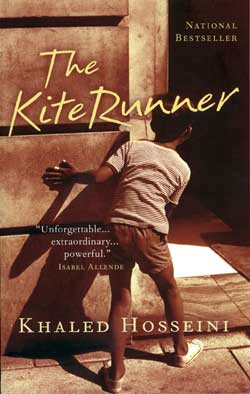
Well, what else? I've been reading books all my life and the above mentioned books are just a small part of my entire reading. In recent years, I've enjoyed The Kite Runner by Khaled Hosseini. The tackling of social issues is always moving. Being a romance fiction enthusiast, I'm not such a great fan of social novels, but The Kite Runner is really an eye opener into the Afghani society and of human weaknesses in general. It's an emotional book and one that I cried a lot over. I would recommend it to all book lovers, especially those interested in reading about different cultures.

I can't talk about all the books I've read. That would take too long and I doubt anyone could read the whole post. But for all those first time readers out there who want a good recommendation, any and all of these books would be a great first read. The world of books is a great one, and until you've found your greatest book, just keep on reading!


February 10, 2011

Suddenly Single

I love reading, but every once in a while I get sick of all the serious reading I do and want something that requires no mental effort whatsoever. I just want a book I can read and not really give my whole mind to. Suddenly Single was such a book and helped me 'pass the time' and was relatively easy to figure out. Reading a no-brainer, I relax and am rejuvenated for another bout of classics and difficult authors who are actually trying to put something in my brain!

As you can probably tell, I'm not a fan of the 'light romance' genre. These books always seem too unreal and end up happily for everyone. I like a happy ending as well as the next person, but make me believe it. I don't want to know I'm fooling myself! That being said, there is something to be said for such novels. They are good to pass the time with and help you to just let go of the effort; because reading does require effort. You have to let yourself be drawn in, and use your brain to critically analyze the more difficult literature. Maybe I'm speaking as a literature student, but novels do require some insight. You have to make some connections. But with books like Suddenly Single it's just fun.

All such books have the typical story. A successful and strong woman gets dumped or contracts some disease; in short - she is at a life altering position. The book then moves on to discuss how evidently, men find her attractive, sexy and just all round brilliant, yet she has just been dumped by a very attractive husband/boyfriend, who, God knows why left her. Obviously, there is a paradox involved which (most of the time) resolves itself by the said dumper wanting her back! I am thankful to say such was not the case in Suddenly Single. Our heroine here has her share of flaws and I was left wondering why her boyfriend hadn't left her ages ago! But don't worry, the story turns out as you hoped and knew it would. So read on and relax!

February 5, 2011

A Portrait of the Artist as a Young Man

Jan 2
 I thought I'd try something new and review a book while I'm only mid-way through it. Ok, so I read the criticism on it so I may have an idea of how things turn out, but the bulk of it I'm still uncertain about. This is my first venture into Joyce territory and I must say that I like his style. Stream of consciousness is as always confusing (though not nearly as confusing as Virginia Woolf) so it takes some getting used to, but I think I have a handle on it.

A Portrait of the Artist as a Young Man is a mouthful, so I'm just going to call it Portrait. In Portrait we are shown the mind of young Stephen Dedalus. The novel beings from a very young age and jumps to his adolescence and his experiences at school. Stephen has always known he is different. He sees the world in his own peculiar way, and due to this, is somewhat of an introvert. He has brilliance and soon overcomes his shyness but the reader, to whom his inner mind is revealed, always sees his hesitance and timidity. The novel tackles some of the political and religious issues of the time. As the novel is semi-autobiographical, it is natural to compare it to Joyce's actual life.

Feb 3
Joyce skillfully handles Stephen's feelings and confusion over his guilt (about what, you'll have to read and find out!). From chapter 3 onward we are made aware of Stephen's sin. Stephen is, as already said, a representation of Joyce. The struggles he goes through show us the making of the man we know as Joyce. It is illuminating actually to see the development of an artistic child. As compared to Stephen Hero, the revised version of the novel Portrait deals with not just the education of a child, but his artistic development. He struggles with the concept of sin and this struggle makes him a man. I have read up to the possibility of Stephen entering the church. It is now that we will see how he deals with his 'penance' and feelings of guilt. Has he gotten over them and become a new man? Or will he follow something that he never truly believed in? See you guys when I've read more!

February 2, 2011

The Loving Spirit: Daphne du Maurier Challenge

Reading the first few pages of the The Loving Spirit, my initial reaction was that Janet, the protagonist, was a cross between a sweet L. M. Montgomery heroine, and a religious minded Jane Eyre. I was so wrong. The book has nothing in common with Jane Eyre's piety or the sweet and content characters of L. M. Montgomery. Here we have a heroine, who is not openly ambitious, but has dreams widely different from her chosen sphere in life. She is not fiercely passionate, and yet, you get the feeling that she is living a suppressed life and the dam must blow.

But, when it does, it doesn't appeal to me. Janet dreams to live the life of a man, and when her society doesn't allow her this, she dutifully marries and bears her husband children. I would have liked it much more if she had broken free of restraints and found a way to satisfy her desires. Instead she tries to live vicariously through her son. This dream is doomed from the beginning and in every generation the vicious cycle repeats itself. The loving spirit is the unique connection between parent and child that is present in the Coombe family. Janet is where this spirit starts.......all the way down to Jennifer.

I have to say I didn't really enjoy this book. And not because it continued through three generations. I just didn't like the relationship between Janet and her son Joseph. It reminded me vaguely of The Thorn Birds and how Meggie hated her mother's favoritism towards her brother Frank. Although the books are widely different, I disliked the similar preference and total exclusion of everyone else in her life. I actually sympathized, though did not condone Philip's jealousy of his mother's love for Joseph.

This was Daphne du Maurier's first book and at times this is apparent: her writing lacks the polish of her later works and she is not able to carry the story so well through the generations as she does in her later work Hungry Hill. Cause and effect is not so clear because she didn't take the time to acquaint us with the characters' personalities. I didn't develop any attachment to them and had to force my way through most of it. In between, I lost sight of certain characters it would have been pleasant to read more about. I wouldn't recommend this to a Daphne du Maurier fan.