Showing posts with label Hercule Poirot. Show all posts

February 22, 2014

After the Funeral

It's been sometime since I've read an Agatha Christie mystery. So long in fact that I'm out of the phase where I see similarities in all novels and can appreciate each one separately!
 
Rating: ***

After the Funeral is one of those mysteries that I always fail to appreciate. I can't like it although it is well written, and has a strong plot and character portrayal. It just doesn't sit right with me and I don't know why. Maybe it's the grey atmosphere, the sadness that somehow pervades the novel that I can't like. Whatever it is, After the Funeral is not one of my favorites.

It is a sad day (or is it?) when the family gets together to attend the funeral of Richard Abernethie, the eldest Abernethie. Having been wealthy beyond measure, the remaining relatives: a brother, a sister, two nieces and a nephew have only one thing on their minds - how much has he left them? In this 'solemn' atmosphere, the irrepressible Cora Lansquenet blurts out the revealing phrase "It's been hushed up very nicely ... but he was murdered, wasn't he?" 

So begins a maze of theories and suspicion....was he murdered? was it one of them? who was it? The initial doubt soon evaporates with the brutal murder of Cora herself. With another murder, the faithful old family lawyer, Mr. Entwhistle calls in a trusted friend: Hercule Poirot.

Who needed the money the most? Was it the brother - always inferior to his successful brother? or was it the sister - still resentful about the nonacceptance of her painter husband? It could be any one of the next generation - all in need of money for one reason or another (there is never a lack of motive in an Agatha Christie novel). Hercule Poirot must sift through the various motives to find the real murderer ...... someone who has been very clever, and yet not clever enough.


June 11, 2012

The Labours of Hercules

Rating: ***
Hercule Poirot has never doubted his abilities - until one day a parallel is drawn between him and his namesake the great Hercules of Greek lore..... To live up to (or in his own mind surpass!) the glory of Hercules, Poirot decides to take up the famous labours that the Greek hero went through. The twelve stories that follow are all that an Agatha Christie fan could wish for.

The novel contains some of the most famous characters in the Christie universe including Inspector Japp and Countess Vera Rosakoff. I enjoy this novel each time I read it because it has some of the simplest and sweetest stories Christie has written. Among them is The Arcadian Deer which tells the story of a young, handsome mechanic who is searching for the woman he fell in love with, The Augean Stables which concerns the reputation of a good and honest politician (really!); The Labours of Hercules also introduces the character Amy Carnaby - a timid old lady's companion who turns out to be something more. Of course there is also the final reappearance of Poirot's one and only flame Countess Vera Rosakoff. Now old and retired from a life of crime, in Poirot's eyes, she still has more fire than all the girls of the younger generation! All in all, reading these stories passes a fun couple of hours.

June 3, 2012

Appointment With Death

Rating: ****
Another one of Christie's psychological mysteries, Appointment with Death deals with the dynamics of the Boynton family. At the head of this dysfunctional group is Mrs. Boynton, a woman who takes pleasure in psychologically controlling and torturing her victims - and who better as experiments than her own family? her own daughter? Travelling through Jerusalem, the Boyntons make their way through the tourism sites. But even a cornered rat may strike back when pushed to the limit and soon Mrs. Boynton is found dead at Petra.

I always enjoy the more psychological of Christie's detective novels and this one was right up my alley. I enjoyed the characterization, the portrayal of people under psychological duress, and the hopelessness of those who feel they are beyond all aid - it was all expertly drawn. How many of us have seen in films the effect of prolonged torture which inevitably ends in a numb, broken acquiescence to all requests? The whole process of mental control and what it does to those subjected to it was subtly shown in the Boyntons. While the images were not brutal like those in the movies (!) it was a truthful representation. Definitely one of my favorites.

April 23, 2012

Death on the Nile

Rating: *****
One of my favorite Christie novels: intense, emotional and moving, from start to finish, I'm involved one hundred percent in the story. I've re-read the mystery more times than I can count and yet every time I pick it up, I'm engrossed. The twists and turns, the character portrayals, the happy and unhappy endings, all go towards making this book one of Agatha Christie's best.

OK, I'm over-selling it.........that way you'll pick it up and think WTH? I thought this was supposed to be awesome! Moving on to the summary.....

Jackie's honeymoon doesn't end up as she had planned - especially since she's not even on it! Things take an unexpected turn when her fiance falls for her best friend, the young, rich and beautiful Linnet Ridgeway. Jackie is convinced that Linnet went all out for Simon and didn't give a thought to their friendship, and her revenge is simple: follow Linnet everywhere on her honeymoon. Be the thorn in the new couple's happiness. But would she commit murder? It looks like it when Linnet is found murdered - shot through the head. Simon is convinced of Jackie's innocence and it seems he is right. Jackie simply couldn't have done it. But then, who else has a grudge against the young heiress?

Simon is oblivious, but lucky for him, Poirot happens to be on the same cruise and has formed opinions of his own. Can it be that Linnet was murdered, not for love and revenge, but for her money? The suspects on the boat increase with this new motive and Poirot has his work cut out for him. Luckily he meets an old friend, Colonel Race, who is on board for a secret mission of his own. With plenty of motives to go around, the truth stays pretty well hidden.

Some thoughts
The murder was very well planned - but that wasn't what kept me interested. It's the play of all the characters involved and the emotional drama that keeps you hooked. Jackie and Linnet may hold center stage, but there are plenty of other interesting characters who manage to attract attention.

March 29, 2012

The Big Four

Rating: ***

The Big Four covers an international conspiracy involving four mysterious figureheads from around the world. The idea of this mysterious organization called 'The Big Four' is the birth of a new world (an idea that had obsessed Agatha Christie in Passenger to Frankfurt, N or M? and other novels). The threat of unknown figures with a mania for killing off any number of people to cleanse the existing world was one that scared most people who had gone through the war. Number 1 is a man from China who constitutes the 'brains' of the group; Number 2 is an American representing the money; Number 3 is the scientific genius - a famous French female scientist; Number 4 is the 'enforcer' - a man skilled at transforming his appearance and one who gets the job done. It is this man whom Poirot fears the most.

We start the novel off with Poirot deciding to embark on a journey - a journey by boat - to go to his friend Hastings and live the rest of his days in peace and quiet. But by chance, Hastings has come to London, and the aborted departure is anything but good for 'The Big Four'.

Definitely not one of my favorite novels. I am not a fan of Christie's 'international conspiracies' myself more partial to the intimate and personal mysteries involving a family circle with some romance thrown in!

I find Agatha Christie's introduction in Passenger to Frankfurt also fits this novel,
To write a story .... you must come to terms with your background. If the background is fantastic, then the story must accept its background. It, too, must be a fantasy - an extravaganza. The setting must include the fantastic facts of daily life.
Can one envisage a fantastic cause? A secret Campaign for Power? Can a maniacal desire for destruction create a new world? .....
It is not an impossible story - it is only a fantastic one.

I found this particular novel more fantastic than enjoyable. The only point of interest was the battle of wits between Number 4 and Poirot - although there was never any doubt who would succeed! Hastings was his usual dense self.


March 19, 2012

Murder in the Mews

Rating: **
Murder in the Mews is a collection of four short stories starring Hercule Poirot alongside Inspector Japp and Mr. Satterthwaite. Most of the stories have similar plots to later short stories (or even novels) written by Christie. Most notable is Triangle at Rhodes which has many similarities to the novel Evil Under the Sun utilizing the same love-triangle. The other stories include Murder in the Mews, the titular story, with a similar setting to The Market Basing Mystery which features in Poirot's Early Cases, The Incredible Theft similar to The Submarine Plans also in Poirot's Early Cases, and finally Dead Man's Mirror, which uses practically the same devices as The Second Gong. The later stories mostly feature Hastings alongside Poirot. Having read all the later stories, I didn't enjoy reading these so much. However, for a first time read, the endings are satisfyingly unexpected and entertaining.

March 16, 2012

Dumb Witness

Rating: ***
The witness may be dumb, but so is Poirot when he receives a two month old letter from a woman who is now dead! Apparently the death was from natural causes, but coincidentally, old Emily Arundell had suspected someone from her family of trying 'to do away with her' on a previous occasion. Certainly the rewards would be great with four dependents standing to inherit a lot of money on her death. Imagine the surprise and consternation of the rest of the family when the money is left to Emily's annoying and dim-witted companion!

Not one of my favorite Hercule Poirot mysteries as you can see by my rating. I spent the entire time suspecting one person because of one clue; imagine my shock when it turned out to be the only person I hadn't suspected! I suddenly realized how Hastings must feel......

The deduction in the novel was sound and looking back I realize that Christie had paved the way for the identity of the murder. But not one I would want to read again any time soon.

March 13, 2012

Death in the Clouds

Rating: ***
I started Death in the Clouds knowing who the murderer was (no, I didn't read the ending first) and found that it wasn't all that enjoyable. I liked the romance but the plot was typical of Christie: the murder was confined to a small place (the murder takes place in an airplane). It was a case of been there, read that...

When Marie Morisot, a notorious money-lender is found murdered on a plane, practically every other person on board is tagged with a motive that makes him or her suspicion till the final dramatic moment....could it be the unknown daughter posing as someone else? the embezzling Englishman? perhaps the archaeologist who seems to be forging antiquities? Luckily, or unluckily for the murderer, Hercule Poirot was also on that flight, and he doesn't take kindly to murder happening under his very nose!

In most of her novels, Christie manages to start the whole investigation off with some sort of preconceived idea of the murder......that's what you have to watch out for. The start of an investigation is the most crucial in any Christie novel because the statements and ideas of the murder by the detective are almost always initially wrong! For example (spoiler alert) in Death in the Clouds, the idea is that the murder was committed by someone passing by the victim (with the possibility of a blow-pipe floating around in the background confusing the whole issue) and therefore, automatically the characters are divided into possibilities and non-possibilities: people who passed the victim and others who definitely did not. It's the 'did nots' that you have to look out for! There is always some sort of illusion at work which keeps the detective, and us, away from the reality of the murder. (Talk about suspecting the least likely suspect!)

So, reading back, I see I've been rambling, but I can't make my meaning any clearer. Perhaps, reading more Christie will help me to put my finger on it! All in all, not one of my favorites.

March 11, 2012

The Hollow

The Hollow is on of the few Agatha Christie mysteries that I would like to have in my permanent collection.  Something about the story always brings me back to it. It has a unique atmosphere and an eerie quality to its characters that fascinates me.

Rating: ****

The Angkatells include Sir Henry and his wife Lucy Angkatell - the hosts at the Hollow. Invited are guests Midge Hardcastle, John and Gerda Christow, Henrietta Savernake, Edward Angkatell, and David Angkatell. Postponing John Christow's murder would have been better for the unknown murderer; unfortunately Hercule Poirot, who had been invited to lunch, arrives unexpectedly at the scene of a crime.

Hercule Poirot finds himself in the middle of a murder and with the gun still being held by the chief suspect: Gerda Christow. But are things what they seem? Poirot thinks not, and sets out to find the truth - something the people at the Hollow seem to know and desire to hide....

Truth is one of the main issues in this novel. For any Agatha Christie fan, Poirot's reverence for the truth is well-known, but we have another view argued by a character in the novel: isn't it better to make people happy? What use would discovering the truth be except to bring more misery to the living? Poirot, for once struck, nevertheless sticks to his own beliefs, but when he at last does know the truth, it is what he does with it that matters. As he says in the end,

You do not understand. To you it is unbearable that anyone should be hurt. But to some minds there is something more unbearable still - not to know.......To the scientific mind, truth comes first. Truth, however bitter, can be accepted, and woven into a design for living.

The scientific mind and the creative mind are poles apart, but the truth is something they both have to face and deal with. The novel is detailed in portraying the various ways the characters have of dealing with the grief of John's death. I feel sympathy for every character caught in the murder (the poignant images of grief are near the end). Everyone has lost something or comes near to losing something. The plot is actually very simple, but Agatha Christie never allows us to grasp it until the end!

March 7, 2012

Dead Man's Folly

Rating: ***
A folly - I admit I always thought it meant a foolish mistake; apparently it is also some sort of structure! Dead Man's Folly features Hercule Poirot who is summoned peremptorily by the famous detective author Ariadne Oliver to Nasse House. Once he arrives at his destination, Mrs. Oliver tells him her fear: she thinks someone is working behind the scenes, manipulating her murder hunt, to bring about a real murder!

Poirot, never skeptical of his friend's insights, takes a look at the people assembled at Nasse House for the big fete. Things take a turn for the worse when Poirot, unable to avert the disaster, finds the body of young Marlene Tucker; the girl who had been playing the part of the victim is now the real victim. The key to the mystery, Poirot is certain, lies with Mrs. Folliat, the former owner of Nasse House who now lives in the lodge of her former residence. "There will always be Folliats at Nasse House", murmurs an old man. Some sort of message? or curse?

Mrs. Folliat is a unique character and holds the central interest. Being relegated to the outskirts of the house she was once mistress of, she still carries herself with self-assurance and is recognized as the mistress of Nasse House. What secrets she holds is for Poirot to discover - she won't reveal them.

Dead Man's Folly is mostly centered around relationships: the relationship between mother and child, and husband and wife. What people do for family and how much they are willing to accept. Hercule Poirot, always sympathetic, gives his little talks and tries to bring people together. I love his little match-making parts in the novels.

December 31, 2011

Cat Among the Pigeons

Rating: ****

Meadowbank School for Girls is not just a school; it is a work of art. Miss Bulstrode contemplates her life long project and feels that it is now time to retire - when things are at their peak. But things are fast approaching a collision course when an international conspiracy, a killer, and a bag of jewels all converge; two weeks later, Miss Bulstrode sees her life's work lie in ruins about her with two murders occuring side by side. Things may have remained unresolved if Julia Upjohn, a student at the school, hadn't had the presence of mind to figure out the mystery, and call in the great Hercule Poirot.

Some thoughts
One of my favorite Agatha Christie novels, Cat Among the Pigeons has a lot of great characters. I love the unique teachers: Miss Rich who has genius and goes about with her hair falling about in disarray, and Miss Bulstrode, 'The Presence' whom all revere and fear; and the others: Mrs. Upjohn, a fond mother who is somewhat absent-minded, and has a weird sense of adventure (a friend of Mrs. Summerhayes who appears in Mrs. McGinty's Dead); and finally her daughter Julia Upjohn, who looks after her mother and is the only one smart enough to discover the mystery.

The ending may not have been as interesting as the rest of the novel, but it seemed natural. The expert deduction of Hercule Poirot wasn't as 'great' at it normally is and if I had been reading the novel for the first time, I would have been surprised by the identity of the killer. 

December 27, 2011

Three-Act Tragedy

When Mr. Babbington dies at a party given by the famous actor Sir Charles Cartwright, the host is sure it's murder; however, Mr. Satterthwaite and Hercule Poirot don't agree with. Imagine the surprise of the two experts in human nature and crime when one of the guests, Sir Bartholomew, gives his own party and dies in the same manner.

Rating: ***
Hercule Poirot teams up with Mr. Satterthwaite and Sir Charles to figure out the motive for the first murder - they act on the theory that Sir Bartholomew murder was an outcome of Mr. Babbington's death. What the reason could be for wanting to kill an elderly clergyman such as Stephen Babbington eludes the famous Belgian detective - until by a chance remark, he begins to see light.

Some thoughts
I've found re-reading isn't much fun. Three Act Tragedy however was so much fun! Knowing who the murderer was actually made this book so much better. I loved seeing the little clues as they happened and not having to go 'oh, how was I so stupid?!'. The killing seemed so much more probably once you see step by step how it was done.

I was slightly disappointed that they played the romantic angle so little. I wished Christie had developed the character of Oliver Manders a bit more.  We hear about him throughout the book, but his own feelings are never hinted at until the very end.

Mr. Satterthwaite was decidedly slow in this novel. He noticed one vital point, yes, but missed the thing glaring him in the face. Hercule Poirot, on the other hand, never disappoints. His deduction was as usual spot on, and I love the way he always thinks of the romantic angle managing to bring people together.

December 25, 2011

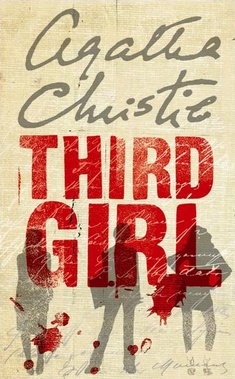
Third Girl

Rating: ***
A young girl who thinks she "might have committed a murder"  comes to consult Poirot at his flat one day. "You're too old" is how she leaves him, stunned yet intrigued. His ego may have been hurt, but more importantly, his curiosity is piqued. Who is this girl and why does she think she's murdered someone? Surely, one would know?

Poirot, with his infallible "grey cells" begins to track down this girl. He senses some impending danger - either to the girl or from the girl. What is the mystery? Who is this girl? Is she mad? Or delusional? Was the whole thing a joke? Somehow, Poirot doesn't think so and until he figures it out, he won't rest.

Some thoughts
This book reminded me of two other Agatha Christie books: Why Didn't They Ask Evans? and The Mirror Crack'd From Side to Side. Agatha Christie's style is somewhat repetitive. For one thing, she used the same device in both Why Didn't They Ask Evans and Third Girl: A person who believes they are suffering from cancer commit suicide, which actually turns out to be a very clever murder.

I think I'm developing a tortuous mind like Poirot.

This book featured one of my favorite characters in the Agatha Christie Universe, Dr. Stillingfleet. The loose-jointed, red-headed young doctor is a refreshing and endearing character. Really, it's because of his character that I enjoyed re-reading this book so much. Besides that, the novel had no extra brilliance that would recommend it.

December 7, 2011

The Clocks

Rating: ***
The Clocks by Agatha Christie has a huge cast that is just 'mentioned'. What I mean is that a lot of known characters from various novels are mentioned in this novel. Both Hastings and the crime writer Ariadne Oliver are mentioned. Poirot also refers to Miss Lemon. George, Poirot's valet features in this novel, along with the great detective himself. Finally, we have The Young Man in Love With One of the Woman Suspects (see my Agatha Christie page), Colin Lamb, who is hinted as being the son of one of Poirot's old friends; he is a major figure in the novel. With so many characters, you'd think the mystery would get lost somewhere in between.

Wilbraham Crescent, The Cavendish Secretarial Bureau, and a secret service agent - all are tied up with the mysterious happenings in house No. 19. On a certain day, they all unexpectedly collide when Sheila Webb comes screaming out of No. 19 straight into the arms of Colin Lamb. Apparently, she has seen a dead body.

The authorities hit a wall at the first step: the identity of the dead man. Till they can figure out who he is, Inspector Hardcastle and Colin Lamb have nothing to go upon. It's then that Colin Lamb brings his old friend Hercule Poirot onto the case.

Because of the apparent complexity of the case (four superfluous clocks are found on the scene; hence the title) Poirot is sure that the mystery itself must be exceedingly simple - they're just missing the obvious. When we get past the major thing blocking our advance: the dead man, it becomes what it is - a murdered man who is stripped of his identity with the killer sure he would not be easily identified. We get so caught up in the finding the identity that we, like the Inspector, don't wonder why it was so necessary to hide it!

Spoiler alert!
There were so many coincidences in this book! Sheila Webb is sent to the house where the murdered body lies; it also happens to be the place where her mother lives! A mother who gave her up when she was born. But that is not where it stops; the mother is also the very criminal master mind Colin Lamb had been searching for when he runs into Sheila Webb screaming out of the house (only he doesn't know it).

For people who know Agatha Christie inside-out.
Other things I noticed in The Clocks were too many near hits which turned into misses: people not recognizing faces, other people not recognizing a pattern - both things which could have helped solve the case faster. Then, I noticed a lot of repetition in this novel. Agatha Christie reused many of her devices e.g. a girl with a slow thinking process who has seen or "not seen" something (as the case may be) and hence ends up getting killed (happened in The Moving Finger). I think I'm noticing this because of reading too much Agatha Christie. I'm gonna have to stop awhile.

November 12, 2011

Evil Under the Sun

Rating: **
Murder seems to follow Hercule Poirot wherever he goes. Vacationing at the Jolly Roger on Leathercombe Bay, the private detective instinctively feels the presence of evil - a sense of impending doom. Most of the guests center on Arlena Stuart, actress and seductress of men, as the cause of all the tension. Later, when she is found strangled, not many mourn her death.

This is not one of my favorite mysteries by the Queen of Crime. It lacked both drama, and a suitable plot twist. But one thing that I learned on re-reading this novel was the author's methodology. She uses mainly two devices which either help or deter us in solving the crime. First are the various hints which are supposed to lead us to the murderer and are therefore significant. You learn to look out for any seemingly unnecessary stories about characters, or some prolonged conversation which is intended to show us some hidden mystery; but side-by-side to this, we have misleading hints that seem significant, but some part of the information is withheld so that we jump to the wrong conclusion! She, as always, remains superb at misleading, but we eventually realize that the clues were always there to find.

Agatha Christie's characters are never successfully portrayed on television. This is because they are not fully developed, round characters. She has a tendency to stereotype and that is where I think the difficulty arises. Agatha Christie normally categorizes her characters into various types. But people are more than just types, we have to look at them from so many angles and even then we only manage to catch a glimpse. This book had a lot of her normal characterization, for example, we have the typical American couple with the talkative wife and the compliant husband (the same type of talkative American is portrayed in Murder on the Orient Express), we have the quiet, inexpressive Englishman who shows no emotion over the death of his wife, and finally, the nice, slightly pretty wife who has 'brains', a college education and hence no sex appeal!

Nevertheless, some of her characters are unique and fun to read about - I liked the depiction of Arlena Stuart as a man-crazy woman, who was actually to be pitied (read and find out about the reality of her personalty!), and of Rosamund Darnley, a successful business woman, who feels the lack of a husband and children.

Colonel Weston appears in this novel, an old friend of Poirot's, he had previously appeared in the novel Peril at End House. Mrs. Gardiner also mentions one of Poirot's previous cases Death on the Nile. I love the whole illusion of a separate world that Agatha creates with her reappearing characters, and references to old cases.

October 10, 2011

The Mystery of the Blue Train

Rating: ***
Jewels - the cause of so much sorrow and bloodshed. Billionaire Rufus Van Aldin doesn't believe there is any danger when he gives the famous Heart of Fire, the biggest ruby worn by Catherine of Russia, to his adored daughter Mrs. Ruth Kettering. He soon repents his decision when she is found robbed and murdered on her way to France on the Blue Train.

Hercule Poirot, old and now retired is on the scene of the crime. The prime suspects are: Derek Kettering, husband of the victim, who is in trouble financially. The billionaire's daughter was about to divorce him which would have landed him in deep trouble; Comte de la Roche, Ruth Kettering's former lover and a man who knows how to seduce women and trick them into giving him money; the Marquis, an elusive jewel thief whose identity remains unknown to the police. Was the murder committed by the robber? Or are the two crimes separate?

According to the evidence of the maid, Ruth Kettering had an unexpected male visitor on the train. The clue to the murder lies in this evidence along with the fact that Ruth Kettering's face had been disfigured. Why did the murderer feel it necessary to distort his victim's face? Hercule Poirot, as the private detective on the scene, takes up the case.

Some thoughts
With a similar plot to the short story The Plymouth Express, I found myself guessing who the criminal was. I liked the characters in this novel and the small romance. I had forgotten some of the details and re-reading this was fun, although as a first-time read, I didn't really enjoy it. For someone just starting Christie, I would suggest to start with one of my four star rating books.

An interesting feature of this novel is that Katherine Grey, one of the characters in the novel, is from St. Mary Mead! For those that don't know, St. Mary Mead is Miss Marple's village. Although many fans had requested a novel featuring both Hercule Poirot and Miss Marple, Agatha Christie felt that they could never work together on a case. But what is so fun about her books is that she has created a whole fictional world in which she re-uses certain detectives, suspects and even places so that we feel that Miss Marple and Hercule Poirot both exist, but in separate spheres.

Cards on the Table

Rating: ****
Mr. Shaitana is no ordinary personality. He is a collector. Approaching Poirot one day, the Mephistopheles-like character invites him to a dinner party in which he will show case his unique collection - a collection of murderers; those murderers who have gotten away with their crimes.

Four crime experts; four supposed criminals; that is Mr. Shaitana's idea of a dinner party. Hercule Poirot meets Mrs. Oliver, the celebrated detective writer, Colonel Race, a Secret Service Agent, and Superintendent Battle from the Scotland Yard, all representatives of law and order. The other mysterious guests include murderers Dr. Roberts, Mrs. Lorrimer, Miss Anne Meredith, and Major Despard. At the end of a game of bridge, the crime experts come to take their leave of Mr. Shaitana, only to find him murdered. The only four in the room with Mr. Shaitana were the other four guests playing bridge. It is up to the others to find the murderer from within the murderers.

Some thoughts
The interesting thing about this case was that the authorities had absolutely no evidence to go upon. The deduction had to be purely psychological and Hercule Poirot is the king of psychology. The motive is obviously a previous murder that one of the guests thought Mr. Shaitana had discovered. Poirot reveals the purpose of the party to his law-enforcement friends and now they must discover the guests' previous murders as well as Mr. Shaitana's murderer.

This case also has the interesting feature of including four of Agatha Christie's most famous characters: Colonel Race, Superintendent Battle, Ariadne Oliver and of course Hercule Poirot. Each have starred in other novels but this is the only time when they all come together.

I was so tempted to rate this five stars. The only reason I didn't, was, that although the case was one of the best (even better than some five stars), none of the characters really moved me. It was psychologically intriguing but the story was not as touching as it was in Murder on the Orient Express or Death Comes as the End. But as I said, I'm tempted........

October 9, 2011

Murder on the Orient Express

Rating: *****
An evil face; that is what Hercule Poirot notices when he first lays eyes on the man at a hotel restaurant. Later, on the Orient Express, he sees him again: Mr. Rachett. When the man comes to him for protection, Poirot refuses and less than 24 hours later, Mr. Rachett is found stabbed to death in his berth. The train is stranded in a snowdrift, and the passengers of the Stamboul-Calais coach fall under suspicion. Oddly, all the berths are occupied in the middle of winter - an unlikely time for travel. Circumstances are such, that only a passenger from the Calais coach could have been responsible.....Who is the murderer? Is it someone on the train? or did the murderer escape before the snowdrift?

The chief difficulty seems to be the identity of the murdered man. Fleeing from a past in America, Mr. Rachett obviously had enemies. Inspecting his berth, Poirot finds many pieces of evidence - almost too much evidence. Among them, a burned piece of paper on which Poirot discerns a name: Daisy Armstrong. The dead man is discovered to be none other than Casseti, the notorious kidnapper, who fled the country after his money successfully saved him from the charge of kidnapping and killing Daisy Armstrong, a three year old child. Is someone related to the Armstrongs on the train? Poirot hunts through the passenger list and interrogates everyone, but can find no connection. Everybody has an alibi, no one seems implicated, and yet.......things seem to be too neatly worked out.

October 5, 2011

Hercule Poirot, Sherlock Holmes showdown

The Hound of the Baskervilles is my first Sherlock Holmes read and imagine my surprise when I was introduced to Dr. Watson. Perhaps I should explain; I'm an ardent Agatha Christie fan and have read all her novels loving each and every one; in Dr. Watson, I saw how Hastings had been created. Almost point for point the two men are the same. Innocent and naive, believing in ideals and in their mentor, longing for approval from said mentor, believing that they themselves had learned a thing or two about detection and of course that slight annoyance at being used and information being withheld from them because of their beautifully transparent natures. Do I make it clear? Yes, I believe so, because as far as I can see, Dr. Watson and Captain Hastings are one and the same. The only thing they don't have in common is their profession; also, Hastings is more chivalrous than the doctor! I could say that Hercule Poirot and Sherlock Holmes are also identical but there I found some differences - slight, but enough to make them widely different men.

Both Hercule Poirot and Sherlock Holmes are renowned detectives. Even there natures are somewhat similar in that they are both egotistical, and reticent about their discoveries till the last minute (Poirot more so than Sherlock), but in their detection methods I found a big difference. Poirot is forever about the 'grey cells' and arranging 'the ideas' with 'order and method'. Physically gallivanting about on foot and searching for clues is solely Hastings' passion and something Poirot never deems necessary. It is not so for Sherlock Holmes. He examines and looks at every footprint, searchs in every nook and cranny and for every single physical piece of evidence at the scene of a crime. Poirot usually leaves this to the detective assigned to the case. But to Holmes this is important. Nevertheless, both men are geniuses who know the art of deduction.

Hercule Poirot is the type to recline in his chair and fit together the pieces of the puzzle. All he needs is some quiet time to organize his thoughts. Sherlock Holmes, to a certain extent, is the same. But as I said before, his detection is more scientific. I don't mean to stress his scientific approach because he was not at all scientific - only as far as comparison goes, he is more scientific than Poirot.

As for physical characteristics, who doesn't know of Poirot's egg shaped head, and his famous moustache? He is not at all a handsome man, but then he plays on that and his insignificance allows him to be taken non-seriously, tricking the criminal into letting down his guard. Sherlock Holmes is decidedly handsome (I think Robert Downey Jr. attests that fact!) and doesn't have the advantage of fooling people into revealing their secrets. Nevertheless, this doesn't keep him back and he is more than enough of a detective to compete with Hercule Poirot.

Then, we also have the styles of the two authors. Conan Doyle likes to reveal the mystery as we move along. That is, we are slowly shown and have it explained to us. At least that was the way it was in The Hound of the Baskervilles. Agatha Christie, on the other hand, creates a sort of atmosphere in which we have all the facts - but are led to look another way. The mystery is only revealed in a gathering at the end of the novel. This atmosphere is detectable on reading the book for a second time. You then begin to see how each fact was presented to us from the beginning, and how we missed it.

Wait till next time to read my opinions on Irene Adler and Countess Vera Rosakoff. So far, I haven't had a chance to read an Irene Adler story. Look for my later comparisons as I read more Sherlock Holmes.

September 30, 2011

The Mysterious Affair at Styles

Rating: ****
Agatha Christie's first published novel The Mysterious Affair at Styles led to her continuing success through famous detective Hercule Poirot and his side-kick Arthur Hastings. Lieutenant Hastings, out on sick leave from the army during World War I, is invited by friend John Cavendish to spend his time at Styles Court. Styles Court is owned by John's step-mother, formerly Emily Cavendish who has recently married a young and mysterious Alfred Inglethorp. John and his brother Lawrence are sure that the man is after their step-mother's money but have no way of proving it. The old lady is absolutely besotted creating a lot of tension.

In this out of the world place, Arthur unexpectedly meets an old friend Hercule Poirot. Emily Inglethorp, always charitable and generous, has helped Poirot and some of his countrymen to settle in England. It is because he is indebted to her that the renowned Belgian ex-detective takes on a new case - that of Emily Inglethorp's murder; For one day, Emily is found suffering from seizures in her bed; her subsequent death is put down to strychnine poisoning.

The murder increases the tension pitching the whole family into a nightmare. The prime suspect is Alfred Inglethorp, but Poirot does everything he can to stop his arrest - it is crucial to the solution that Alfred is declared innocent and John tried for the murder. The family desperately awaits the outcome.

I am a huge Hercule Poirot fan. I love his method, his idiosyncrasies (which in this case actually help with a key piece of evidence), and his 'grey cells'. In re-reading the novel I was sure I would find some loophole or some fact that didn't go with the solution to the murder, but I found no such thing. Each and every piece of the puzzle was found by Hercule Poirot and properly accounted for. I looked at everything in a different light and saw how Poirot's logic, which led him to the murderer, was actually really sound. I wonder how I never got it the first time round!

It was really the characters rather than the plot that made this novel so great. I loved the intricate relationship portrayals and how we are shown Hastings' chivalry and innocence right from the beginning. Among the notable characters in the novel was John Cavendish's wife Mary - a unique character and one I have not found in any other Agatha Christie novel. Poirot, always out to nail the murderer, nevertheless has a human side that shows itself in the little things he does for the innocent.